§ Loading
NOTICE
If you’re going through something at work, start here . If you’re in crisis, call 988 .
ABOUT
Why this lab exists, and who’s running it.
A research lab in Toronto, started in 2025 after ten years inside Canadian disability management, a graduate MS capstone on neurodivergent workplace climate, and a personal loss that confirmed what both had been pointing to. Every publication free. Every claim cited. Every refusal named.
Founded August 2025
Incorporated March 2026
Toronto, Ontario
CC BY-SA 4.0
Every claim on this page that names a number is sourced. If you find a stat without a citation, tell us — hello@cultureiqlabs.ca — and we’ll fix it or refuse it.
01 / What this is
AN ECOSYSTEM OF EVIDENCE-BASED RESEARCH, TRAINING, AND TOOLS FOR THE WORKING WORLD.
RESEARCH
Peer-reviewed publications and field notes. Every claim cited by author and year.
View TRAININGPrograms for HR, managers, and clinicians. Evidence-grounded.
View TOOLSFrameworks, scales, and risk models. Free to use.
ViewWorkforce health is built by everyone in the system: employees, HR and disability-management professionals, managers, employers, and clinicians. Our work is to bring them together through publications, programs, and frameworks that make the science usable across the system.
02 / Three threads, one lab
THE LAB’S ORIGIN
A decade in the file, a capstone, and a death that confirmed what both had been pointing to.
CultureIQ Labs exists because three things converged. The first was a decade across five Canadian group benefits and disability management carriers. Reading files. Watching the same pattern repeat — stalled returns, supervisor conversations that should have been routine but weren’t, accommodation refusals grounded in documentation rather than in the work itself. By the time I’d seen it from enough sides, I knew the carriers had decent claim systems, the employers had decent policies, the literature had decent answers — and the thing that didn’t exist was a way to put all three together so they held up to scrutiny.
The second was the capstone. I completed my MS in Industrial-Organizational Psychology at Capella University in January 2026 with an integrative project on neurodivergent employees in Canadian workplaces — specifically, how organizational climate shapes whether a worker discloses, what accommodations they get, how much they end up masking, and what that does to their brain health. The project developed four new measurement scales (NDACS, DBS, WAES, MAWS) and designed a sequential study linking climate to those outcomes through disclosure, accommodation, and masking — a dual-perspective design that puts neurodivergent employees and the practitioners who accommodate them side by side. It’s a study CultureIQ Labs intends to run.
The third was September 24, 2025. My father was terminated in June 2025 after months of psychological abuse by his boss. Three months later, on September 24, he died at fifty-four of complications from cirrhosis none of us knew he had. He was an old-school man who tied his worth to his ability to work. Losing the job didn’t just take the income; it took the identity. The workplace abuse he carried in silence — because the workplace gave him no safe way to name it — contributed to his death. He didn’t need resilience training. He needed a workplace where it was safe to say this is killing me without losing his job for saying it.
Three threads. Different surfaces, same conclusion: when a workplace demands silence from a worker — neurodivergent, abused, struggling, different from the assumed default — the cost is measurable, and the harm is structural. The lab exists to give the people who do that work language and evidence to name it, in research, in training, in tools.
Three commitments came out of it
- 01Cite or refuse
- 02Build in the open
- 03Hand the evidence back to the people doing the work
FROM THE CULTUREIQ LABS LINKEDIN ESSAY, OCT 2025
My father needed psychological safety, not resilience. He needed a workplace that protected him from abuse instead of one that enabled it.
— MEAGAN ANGELUCCI, FOUNDER
03 / Founder
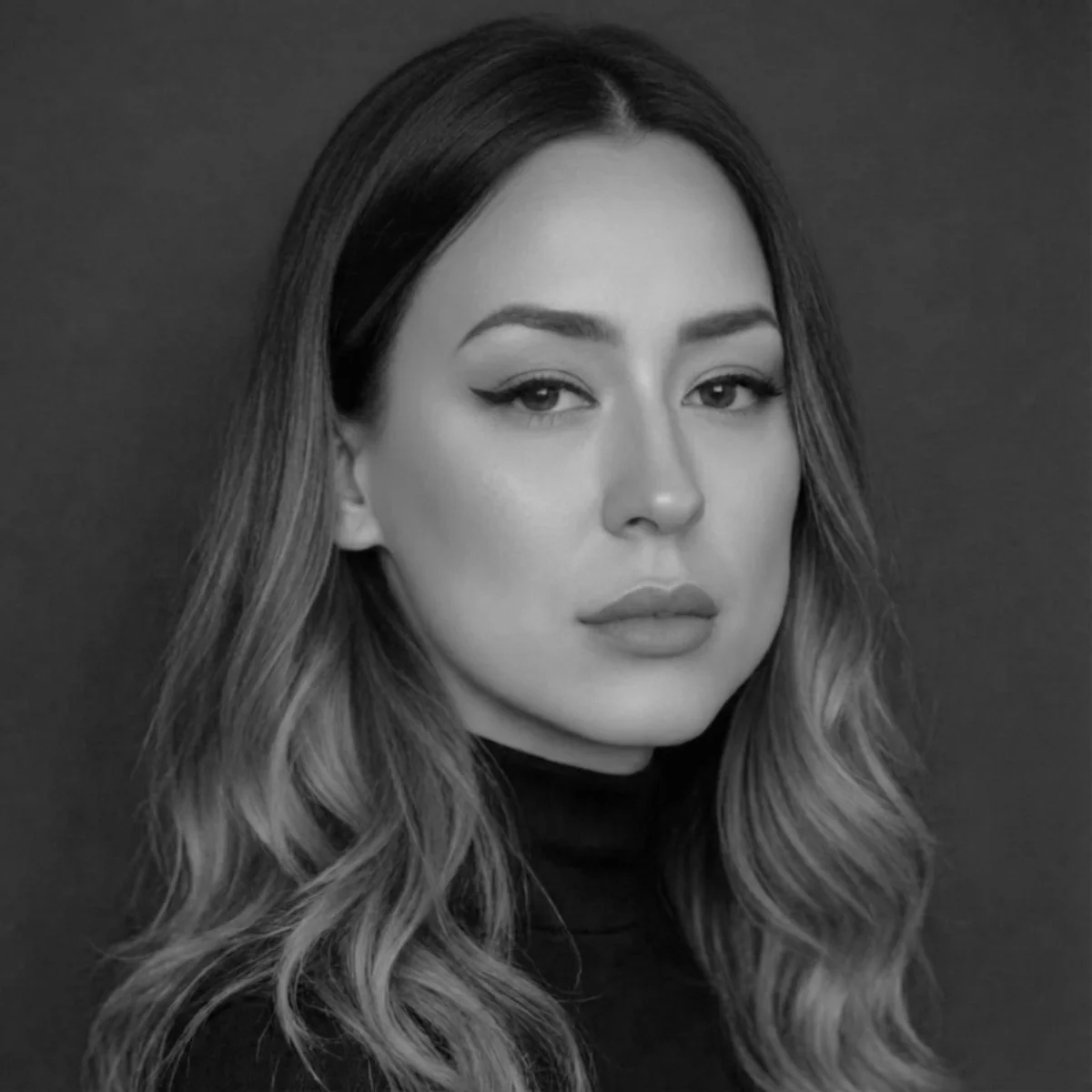
Meagan Victoria Angelucci.
- MS, Industrial-Organizational PsychologyCapella University · January 2026
- CDMPCertified Disability Management Professional · NIDMAR
- SHRM-CPSociety for Human Resource Management
- Ten years inside Canadian DMFive group benefits + disability management carriers
Meagan founded CultureIQ Labs in August 2025 and incorporated it federally in March 2026. Her decade in Canadian disability management and her graduate research into neurodivergent workplace climate are what the lab is built on — most concretely in its forthcoming twenty-factor Return-to-Work Complexity Risk Model, of which she is principal author. She is based in Toronto and is currently the corporation’s sole director.
04 / What we will and won’t do
THE COMMITMENTS, NAMED.
Abridged from the Social Mission Policy adopted by the sole director on 2026-05-18. The full text is at /social-mission.
WILL
- Cite every claim by author and year, in the body, not in a footnote no one clicks
- Publish all research free and license it CC BY-SA 4.0
- Write at a grade 6–8 reading level for affected readers; use academic vocabulary only where practitioners expect it
- Meet WCAG 2.2 AA as a floor on all public materials
- Refuse to publish what we cannot source — and name the refusal
WON’T
- Sell engagement-survey products that measure sentiment instead of structural conditions
- Frame workforce health as an individual-resilience problem
- Take engagements where a conflict of interest can’t be cleanly resolved
- Adjust findings to fit a desired outcome
- Declare dividends to shareholders while this policy is in effect
05 / Eunosa, our AI research tool
The AI tool for disability-management and return-to-work practitioners.
Eunosa is CultureIQ Labs’ AI research tool, built for Canadian disability-management and return-to-work practitioners. A DM consultant types a clinical, accommodation, or return-to-work question and gets a written answer with per-span citations to peer-reviewed research, WSIAT decisions, and live Canadian case law from the A2AJ legal API. Decision support, not adjudication.
Eunosa keeps its own brand and its own domain (eunosa.com) because it serves a specific practitioner workflow that deserves a dedicated visual language. But it is a product of CultureIQ Labs Corp.
AI RESEARCH TOOL · BY CULTUREIQ LABS
Eunosa (opens in a new tab)
697 peer-reviewed studies · 49,178 WSIAT decisions · Live A2AJ legal API. Citation-validated answers for DM/RTW practitioners.
eunosa.com06 / For the record
For the record.
- Legal name
- CultureIQ Labs Corp.
- Founded
- August 2025
- Incorporated
- March 2026 (federal, CBCA)
- Address
- 145½ Church St, Office 656, Unit 5, Toronto, ON M5B 1Y4, Canada
- Phone
- +1 (289) 402-3601
- hello@cultureiqlabs.ca
- Founder
- Meagan Victoria Angelucci
- Governance
- Sole director; advisory council forming Join as an advisor
- Research licensing
- CC BY-SA 4.0
- Bilingualism
- EN now, FR in development for Q4 2026
07 / Advisory council
We’re building a small advisory council.
CultureIQ Labs stays founder-led, with a single director. Rather than expand the board, we’re building a small advisory council — experienced people who help keep the work honest and useful. Advisors guide the work; they do not control the company, and they carry no legal or financial responsibility.
The role is unpaid and as light or as involved as you like — from the occasional question by email to hands-on contribution. Advisors are named on this site only if they choose; others advise by role only, or privately.
Who we’re looking for
- Lived experience of disability, disclosure, accommodation, or return-to-work
- Front-line practice in disability management, return-to-work, or occupational health and safety
- Clinical practice — occupational medicine, psychology, or therapy that touches return to work
- Research in industrial or organizational psychology, or occupational health
- Mission alignment with our operating commitments, whatever your background
If you’re interested
Write to hello@cultureiqlabs.ca with “Advisory interest” in the subject line. Tell us briefly what you’d bring and what draws you to the mission. We’ll respond either way.
08 / Read on
EDITED BY MEAGAN ANGELUCCI · I/O PSYCHOLOGY PRACTITIONER · CDMP, MS I/O PSYCHOLOGY